5 Common Causes of Rotary Joint Leakage and On-site Troubleshooting Guide
Rotary joint leakage is a nightmare for factory managers, leading to unexpected downtime and increased maintenance costs. Understanding the root causes is the first step toward achieving a “Zero-Leakage” production line. As a factory with 27 years of experience, we’ve summarized the most common failure points and how to fix them.
1. Sealing Face Wear or Carbon Ring Damage
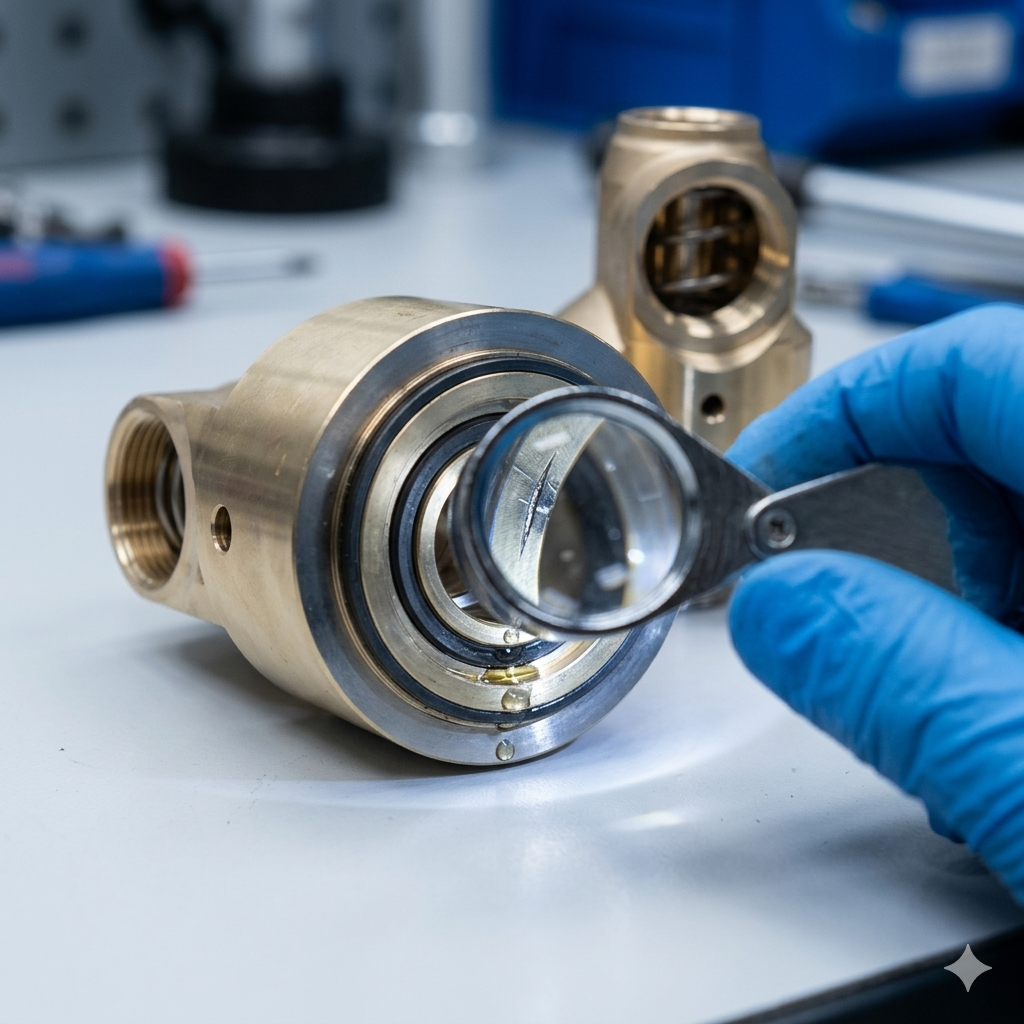
The Cause: This is the most frequent cause (approx. 70%). Particles in the media (like rust or scale) can enter the sealing face, causing scratches or cracks.
Solution: Check the filtration system. If the sealing face is damaged, replace the carbon ring or seal face immediately. Our factory-direct 1:1 replacement kits use high-grade Silicon Carbide to resist abrasive wear.
2. Misalignment During Installation
The Cause: If the joint isn’t perfectly aligned with the machine shaft, it creates uneven pressure on the seal, leading to premature failure.
Solution: Use a dial indicator to check concentricity. Ensure the support rod is not applying rigid stress to the joint body. Note: Always use flexible hoses for connection.
3. Siphon System Misplacement
The Cause: In steam applications, if the internal siphon pipe is loose or incorrectly positioned, condensate will accumulate, causing “water logging” and increasing torque and vibration.
Solution: Inspect the internal siphon pipe’s rigidity and orientation. A stable siphon system reduces internal turbulence and extends seal life.
4. Thermal Shock & Pressure Surges
The Cause: Sudden changes in temperature or pressure can cause the sealing materials to crack or lose their tension.
Solution: Implement a slow start-up procedure. Ensure your rotary joint is rated for your maximum operating parameters. Our joints are 100% tested under dynamic pressure to withstand surges.
5. Using the Wrong Seal Material
The Cause: Using a standard seal for high-speed or corrosive media.
Solution: Consult with our technical team. We provide customized solutions (Tungsten Carbide, Silicon Carbide, or Specialized Carbon) based on your specific media and RPM.
Conclusion: Don’t Just Repair, Optimize!
Regular maintenance is key, but choosing a robust, high-precision rotary joint from a source factory is the ultimate solution. Contact us with your current brand model, and we will provide a 1:1 optimized replacement proposal to reduce your maintenance frequency.