Why Do Premium Rotary Joints Fail Prematurely in Heavy-Duty Industries? A 20-Year Engineering Perspective
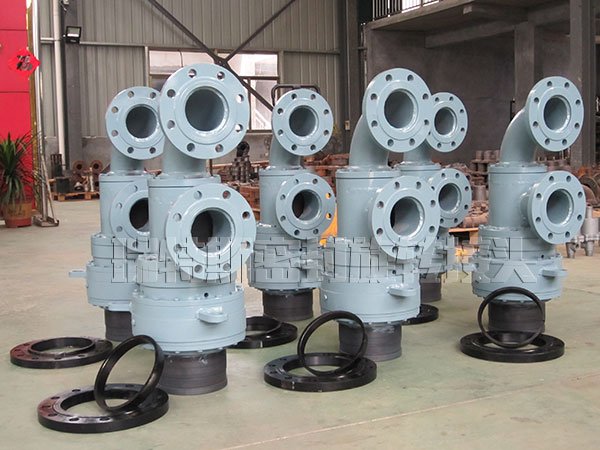
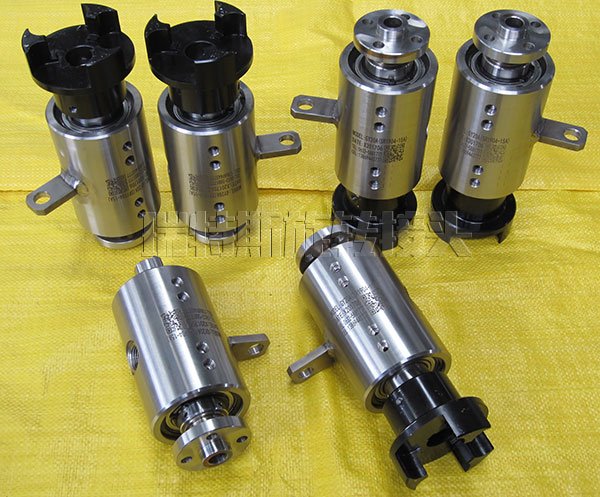
In high-load manufacturing environments—such as paper mill drying cylinders, corrugated packaging roll heating, and rubber extrusion cooling—the rotary joint is a small component that carries a massive responsibility. When it leaks, the cost isn’t just the price of a replacement part; it’s the thousands of dollars lost per hour in unexpected factory downtime.
Many maintenance managers ask me: “We buy expensive premium European or American brands, so why are we still seeing premature seal failures within just a few months?”
Having spent over 20 years engineering and manufacturing rotary unions, I want to share the technical reality behind these failures and how to address them without blowing your MRO budget.
1. The Root Cause: Micro-Pitting & Thermal Shock
In paper and packaging mills, rotary joints constantly handle saturated steam and high-temperature condensate. The two primary culprits for early failure are:
-
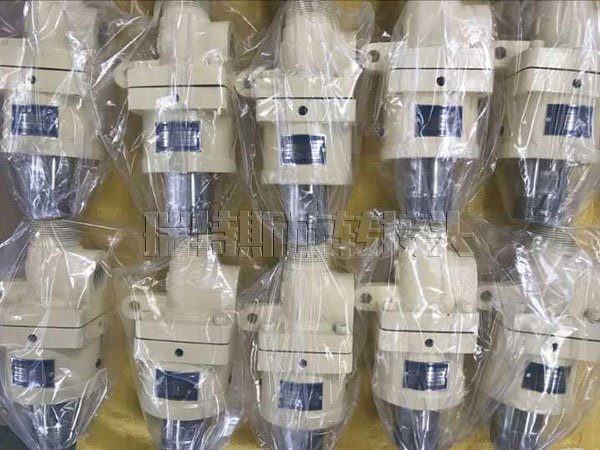
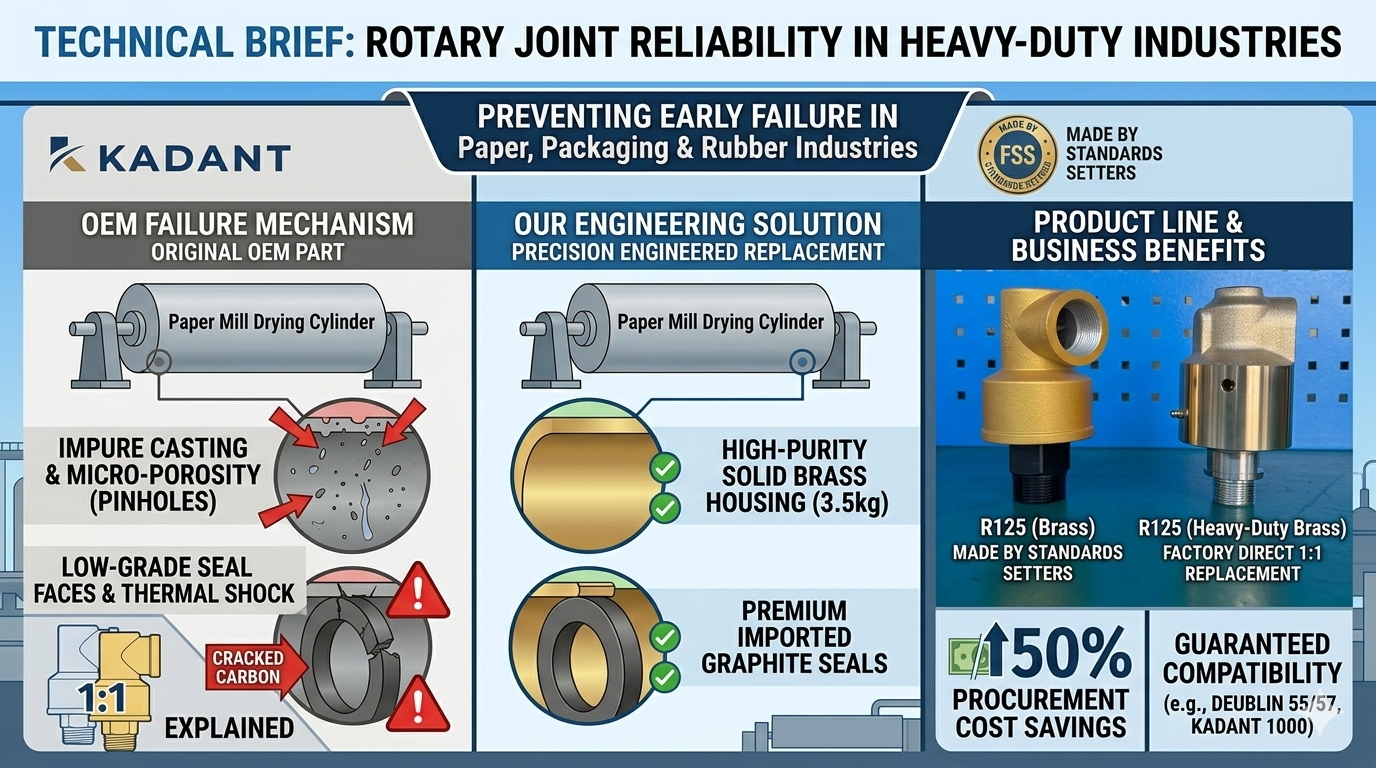
Impure Castings (The Casing Trap): Many standard joints utilize recycled scrap copper or thin-walled brass. Under continuous thermal cycling, micro-pores (pinholes) develop within the metal structure, leading to pressure loss and casing deformation.
-
Seal Face Degradation: The carbon-graphite and silicon carbide seal faces are the “heart” of the joint. Thermal shock from sudden temperature fluctuations fractures low-grade carbon seals, leading to rapid steam leakage.
2. The Solution: Heavy-Duty Metallurgy & Imported Seal Matching
To match or even exceed original OEM performance (such as Kadant or Deublin), engineering must be uncompromised:
-
Solid Brass Housings (3.5kg Standard): For standard steam applications, using high-purity solid brass with reinforced walls provides the mechanical stability needed to withstand continuous high pressure ($100\text{ MPa}$ or higher in specialized hydraulic applications) and temperatures up to $220^\circ\text{C} – 250^\circ\text{C}$.
-
Top-Tier Carbon Chemistry: Utilizing imported premium graphite seal faces ensures a highly stable friction coefficient, low wear rates, and excellent thermal conductivity, which drastically increases the Mean Time Between Failures (MTBF).
3. Rethinking the “Brand Tax” in Global MRO
For decades, heavy industries believed that only the original high-priced OEM parts could ensure reliability. However, having participated in formulating the national technical standards for rotary joints, I can tell you that the engineering physics are universal.
By optimizing structural dimensions to a 1:1 match and utilizing identical premium raw materials, it is entirely possible to achieve exact OEM performance while reducing procurement costs by 50%. You don’t need to pay for the logo; you need to pay for the metallurgy.
What is the average lifespan of the rotary joints on your plant’s production lines right now? Let’s discuss technical solutions in the comments.
#MechanicalEngineering #RotaryUnions #PaperMill #CorrugatedPackaging #RubberManufacturing #MaintenanceEngineering #MRO